
As lithium-ion battery technology becomes increasingly important to Florida’s energy infrastructure, local firefighters are receiving specialized training to respond safely to potential emergencies involving large-scale battery storage systems.
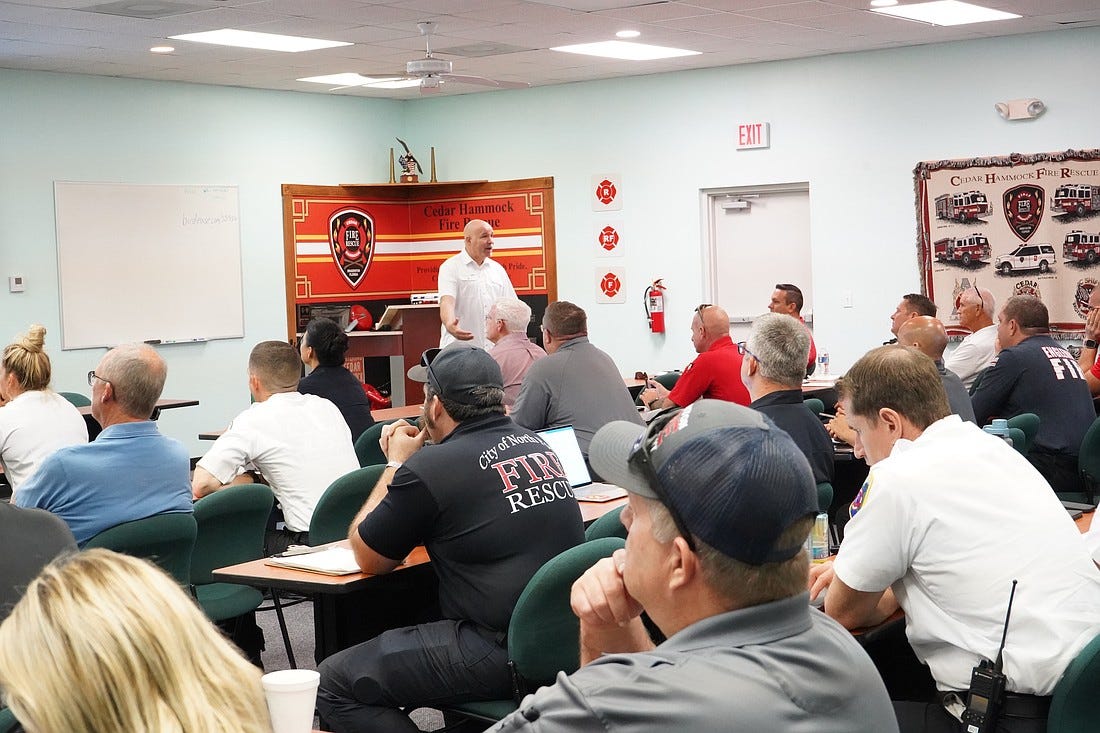
Kyle Brooks, deputy fire marshal for East Manatee Fire Rescue, recently participated in a training session hosted by Florida Power & Light (FPL) in partnership with the Florida Fire Marshals and Inspectors Association. The training, held at Cedar Hammock Fire Rescue, focused on fire risks, emergency response procedures, and safety measures associated with utility-scale lithium-ion battery storage facilities.
FPL uses large battery systems to store excess electricity during periods of lower demand and release it when energy consumption increases. The technology improves grid efficiency and reliability but requires specialized safety protocols because of potential fire hazards.
During the training, Brooks learned how FPL continuously monitors its battery storage facilities, tracking temperatures, hazardous gases, and equipment performance remotely. The systems are designed with multiple safety measures intended to contain potential failures and minimize risks to emergency responders.
Brooks emphasized that protecting human life takes priority over saving equipment. In the event of a battery malfunction, firefighters would first ensure workers and nearby residents were safe. Crews would generally avoid applying water directly to battery equipment unless directed by FPL, instead focusing on preventing surrounding hazards, such as brush fires.
The training also highlighted differences between large, professionally managed battery installations and smaller lithium-ion batteries commonly found in electric scooters, bicycles, and household devices. Brooks indicated that batteries stored or charged inside residential garages can present greater immediate risks to occupants because of their proximity to living spaces.
Manatee County is home to one of FPL’s largest battery storage facilities. The Manatee Energy Storage Center in Parrish occupies approximately 40 acres and has a storage capacity of 900 megawatt-hours, enough to power approximately 329,000 homes for two hours.
The facility contains 132 battery storage containers, each weighing approximately 38 tons and housing hundreds of battery modules. It operates alongside the Manatee Solar Energy Center, which features more than 341,000 solar panels across 751 acres.
When construction began in 2021, FPL described the project as the world’s largest integrated solar-powered battery system. The facility was designed to reduce reliance on traditional power generation during peak demand, with projected customer savings exceeding $100 million over its anticipated 40-year lifespan.
FPL currently operates nearly 1,600 megawatts of utility-scale battery storage capacity across Florida and plans to expand its capabilities as demand for reliable energy storage increases.
As battery technology continues to expand throughout the state, specialized training programs are helping local fire departments prepare for emergencies involving increasingly complex energy systems while prioritizing firefighter and public safety.
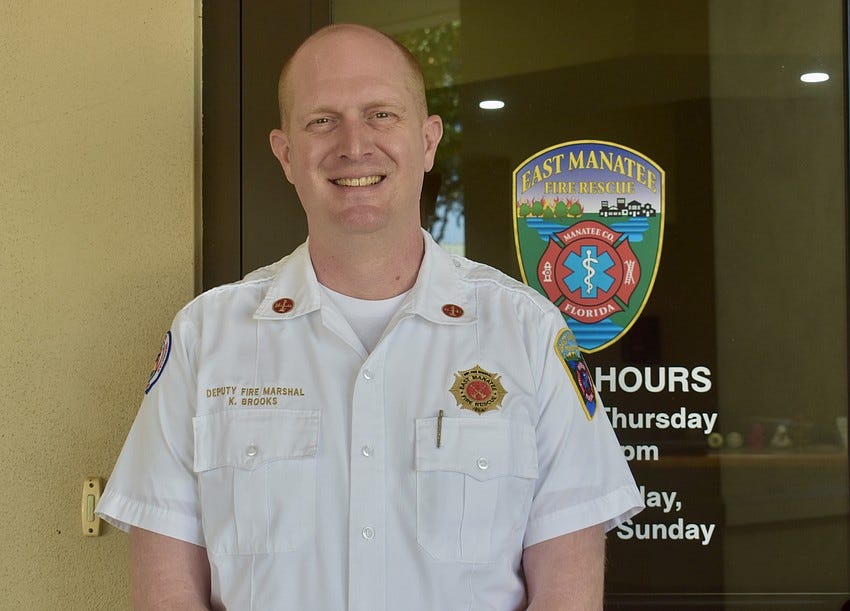
Kyle Brooks, deputy fire marshal for East Manatee Fire Rescue