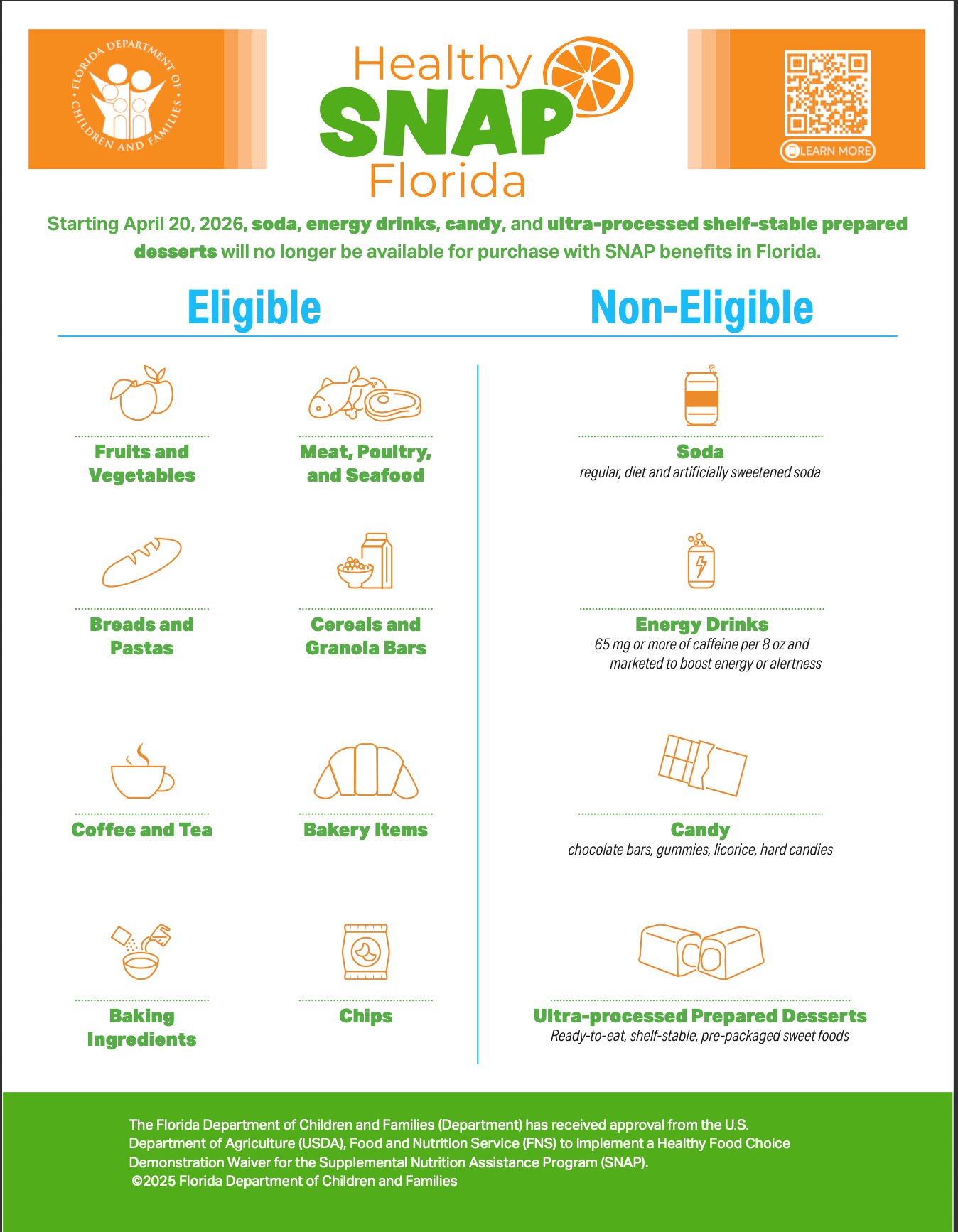
New changes to the Supplemental Nutrition Assistance Program (SNAP) in Florida took effect today, restricting the use of benefits for certain food and beverage items as part of a broader effort to promote healthier eating habits among participating families.
The updates follow federal approval of a Healthy Food Choice Demonstration Waiver, allowing the state to modify which items are eligible for purchase under SNAP. State officials say the changes are designed to better align the program with its original goal of improving nutrition and reducing food insecurity among low-income households.
Under the new guidelines, SNAP benefits can no longer be used to purchase soda, energy drinks, candy, or ultra-processed shelf-stable prepared desserts. These items are defined as products such as regular and diet sodas, high-caffeine energy drinks, chocolate bars, gummies, and pre-packaged sweet baked goods intended for long shelf life.
The restriction applies statewide and is intended to encourage healthier food choices while maintaining access to a wide range of staple grocery items. Foods that remain eligible for purchase include fruits and vegetables, meat, poultry, and seafood; breads and pastas; cereals; coffee and tea; bakery items; and other basic grocery products.
State leaders have framed the change as a proactive step to support better health outcomes, emphasizing the role of nutrition in preventing chronic disease and improving overall well-being. By narrowing the list of eligible items, officials aim to ensure that SNAP benefits are used to provide more nourishing options for individuals and families.
The policy marks a significant shift in how SNAP benefits can be used in Florida and will be closely watched as part of ongoing national conversations about nutrition, public health, and food assistance programs.