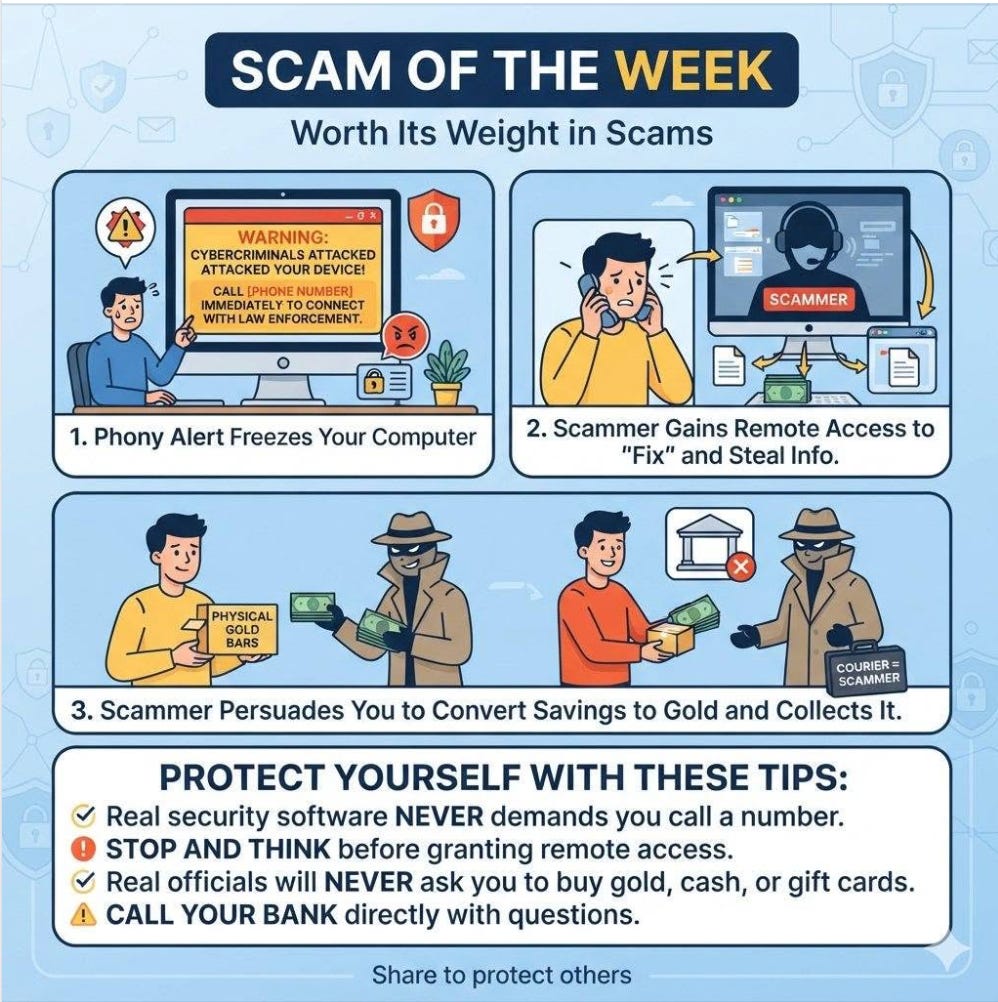
A scam that begins with a frightening computer pop-up can end with victims handing over their life savings to criminals posing as law enforcement officers or financial security experts.
The scheme starts when a fake security alert appears on a computer screen, sometimes claiming cybercriminals have attacked the device or compromised the user’s financial information. The message instructs the victim to immediately call a phone number for assistance.
After the victim calls, the scammer may pose as a law enforcement officer, security specialist or other official and request remote access to the computer under the guise of fixing the problem. That access can allow criminals to obtain personal or financial information.
The scam then escalates. Victims may be told their bank accounts are no longer secure and instructed to withdraw their savings and convert the money into physical gold bars, cash or other valuables.
In some versions of the scheme, a courier is sent to the victim’s home to collect the gold or money, supposedly to keep it safe. The courier is actually part of the scam, and victims can lose substantial amounts of money.
Residents can take several precautions. Legitimate security software will not direct users to call an unexpected phone number to resolve a computer problem. Computer users should also avoid granting remote access to anyone who contacts them unexpectedly.
Law enforcement agencies and legitimate financial institutions will not instruct people to protect their money by purchasing gold, cash or gift cards and turning those assets over to a courier.
Anyone who receives a suspicious warning involving a bank account should stop communicating with the caller and contact their financial institution directly using a verified phone number, such as the number printed on the back of a bank card or provided through the institution’s official app.
Residents are encouraged to discuss these scams with family members, particularly those who may be unfamiliar with remote-access or impersonation schemes.