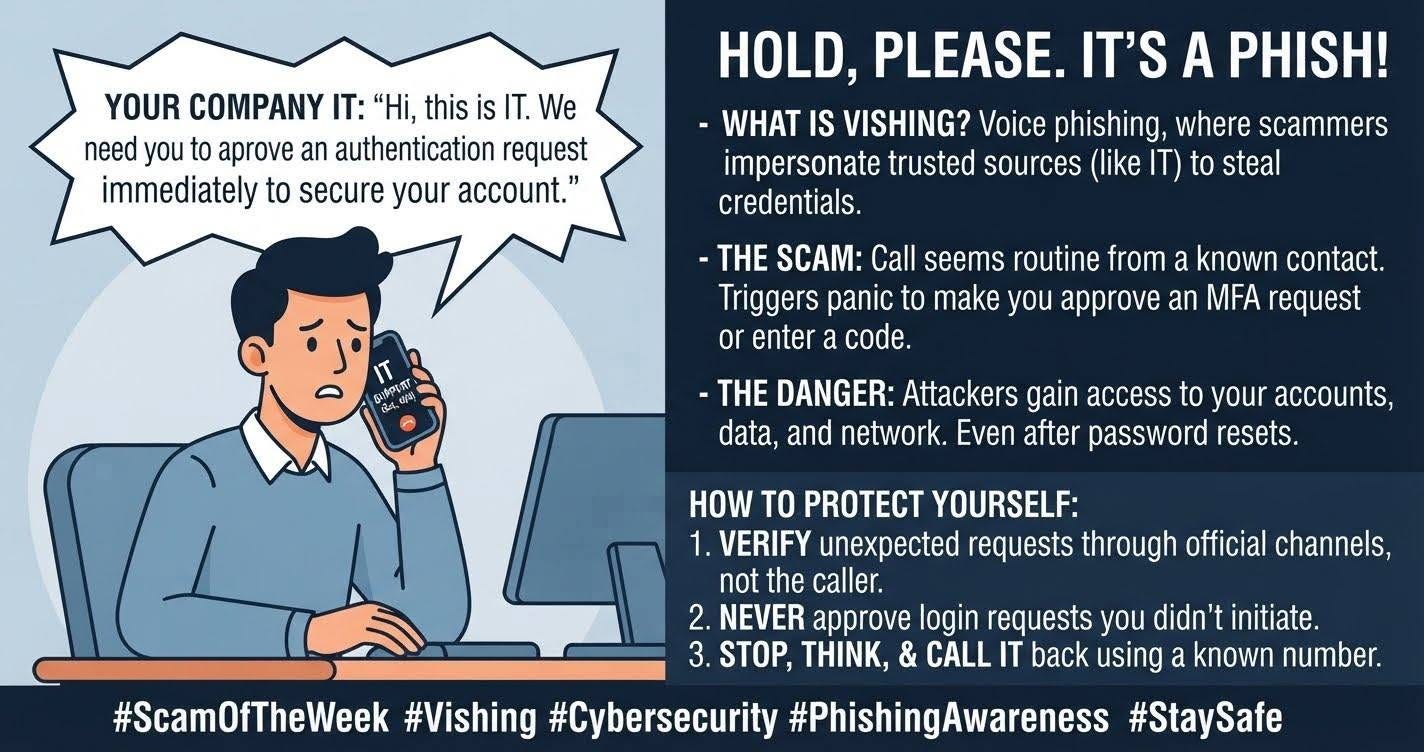
The Holmes Beach Police Department is raising awareness about a growing cybersecurity threat through its Scam of the Week information campaign. This week’s warning focuses on vishing, a form of voice phishing in which cybercriminals impersonate trusted individuals to steal login credentials and gain access to sensitive information.
The scam often begins with an unexpected phone call from someone claiming to represent an organization’s information technology department. The caller may appear to be a familiar co-worker or trusted contact and may even reach employees on their personal phones.
During the conversation, the caller creates a sense of urgency by claiming an account needs immediate attention. Victims may be instructed to approve a multifactor authentication (MFA) request, enter a verification code or complete another seemingly routine security procedure.
Cybercriminal groups, including ShinyHunters, have used these tactics to gain unauthorized access to accounts and computer networks. Once access is obtained, attackers may steal login credentials, compromise sensitive information or register their own devices and authentication methods.
In some cases, criminals can maintain access even after a victim changes their password. Signing out of all active sessions and reviewing registered devices and authentication methods are important steps when an account has been compromised.
The Holmes Beach Police Department encourages residents to remain cautious when receiving unexpected requests for account verification or security approvals. Individuals should verify suspicious requests through established communication channels rather than relying on information provided by the caller.
Authentication requests should never be approved unless the individual initiated the login attempt. Anyone receiving a suspicious call claiming to be from IT support should end the conversation and contact the organization’s technology department using a verified phone number.
The department’s Scam of the Week information serves as a reminder that cybercriminals frequently rely on urgency and impersonation to deceive victims. Taking time to verify unexpected requests can help protect personal information, workplace accounts and sensitive data.