
The Holmes Beach Police Department is warning residents about a text-message scam that begins with what appears to be an innocent message sent to the wrong person.
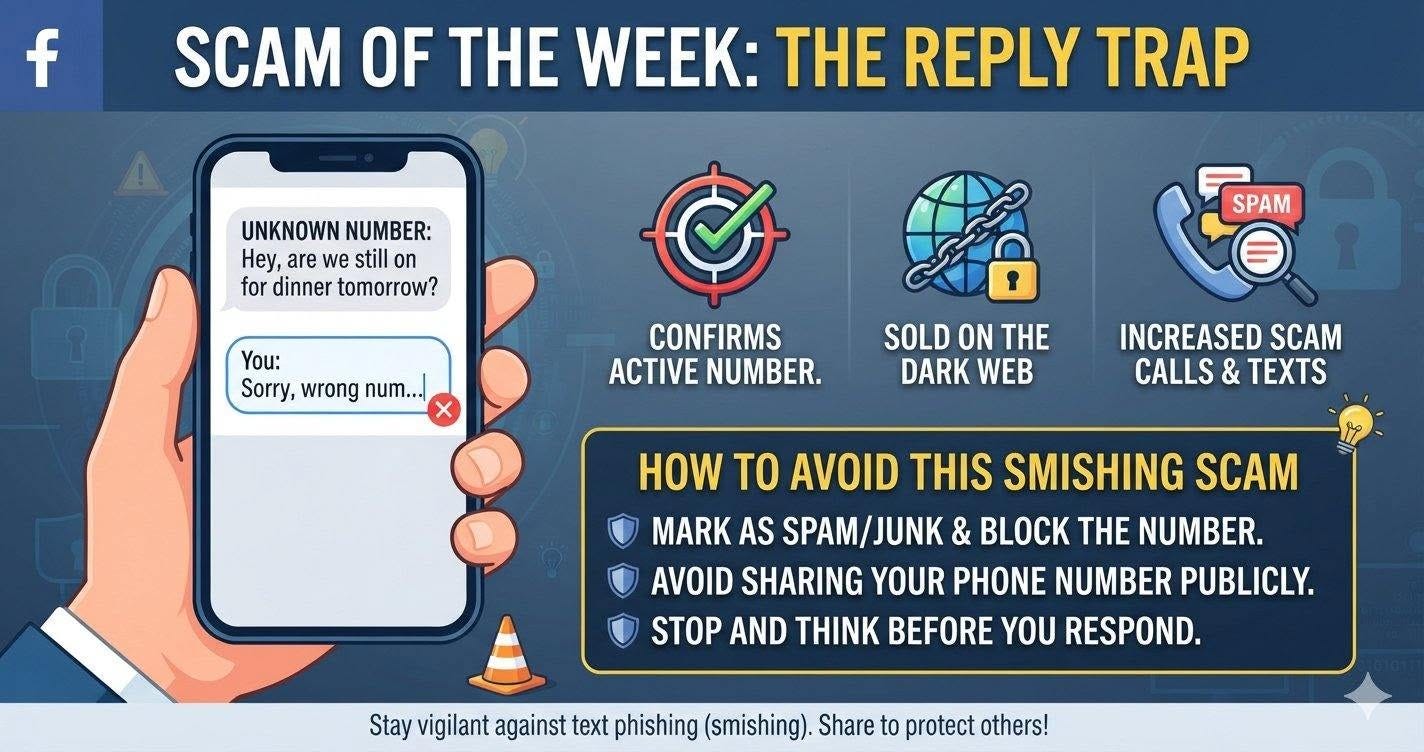
As part of its Scam of the Week awareness campaign, the department highlighted a scheme known as the Reply Trap, in which scammers send unsolicited messages designed to encourage recipients to respond.
The text may appear casual and harmless, such as asking whether the recipient is still planning to meet for dinner or referencing another activity that clearly seems intended for someone else. The goal is to make the recipient believe the sender simply entered the wrong phone number and prompt a polite response.
Police warn that responding can signal to scammers that the phone number is active and that someone is willing to engage with unsolicited messages. That information can make the number more valuable to scammers and potentially lead to additional fraudulent texts or calls.
The scheme is a form of smishing, a type of phishing attack conducted through text messages rather than email.
Holmes Beach police recommend that residents avoid responding to suspicious or unexpected messages, even when the text appears friendly. Instead, recipients should mark suspicious messages as spam or junk and block the sender. Reporting unwanted messages through a phone’s spam features can also help wireless providers identify and filter similar activity.
Residents are also encouraged to limit how widely they share their phone numbers online or publicly, reducing opportunities for scammers to collect personal contact information.
The department’s warning emphasizes that an unfamiliar text does not need to contain a threatening message, suspicious link or request for money to be part of a scam. In some cases, simply getting the recipient to respond can be the first step.
Anyone receiving an unexpected message from an unknown number should avoid engaging with the sender and use caution before responding.
Courtesy of Holmes Beach Police Department