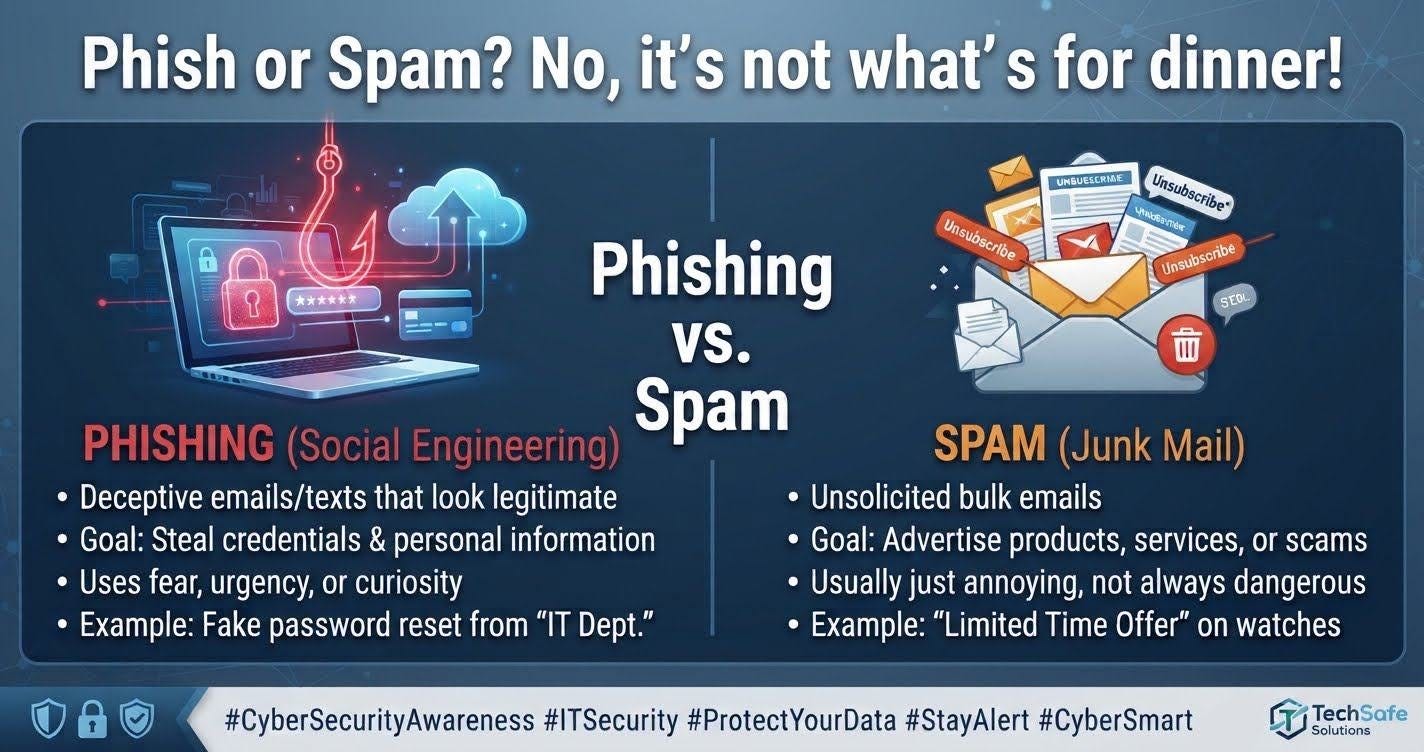
The Holmes Beach Police Department is reminding residents to recognize the difference between phishing and spam emails as cybercriminals continue using deceptive messages to steal personal and financial information.
Phishing emails are designed to trick recipients into revealing sensitive information, including passwords, banking details, and credit card numbers. These messages often appear to come from legitimate businesses, government agencies, or employers and may contain links or attachments intended to compromise personal information.
Scammers frequently create a sense of urgency by claiming an account has been compromised, a payment is overdue, or immediate action is necessary. These tactics pressure recipients into responding before verifying the message.
Spam emails, by comparison, are typically unsolicited advertisements promoting products or services. While often harmless, some spam messages may contain fraudulent offers, malicious links, or dangerous attachments.
Police encourage residents to carefully examine sender addresses, avoid clicking suspicious links, and verify unexpected requests directly with the organization involved. Residents should use official websites or verified phone numbers rather than contact information provided in questionable emails.
Employees who receive suspected phishing messages should report them to their information technology department according to workplace policies. Unwanted marketing emails can generally be deleted or marked as spam.
Suspected phishing attempts can also be reported to the Federal Trade Commission at ReportFraud.ftc.gov.
The Holmes Beach Police Department emphasizes that recognizing suspicious emails and taking time to verify their legitimacy can help prevent identity theft, financial losses, and cybersecurity breaches.