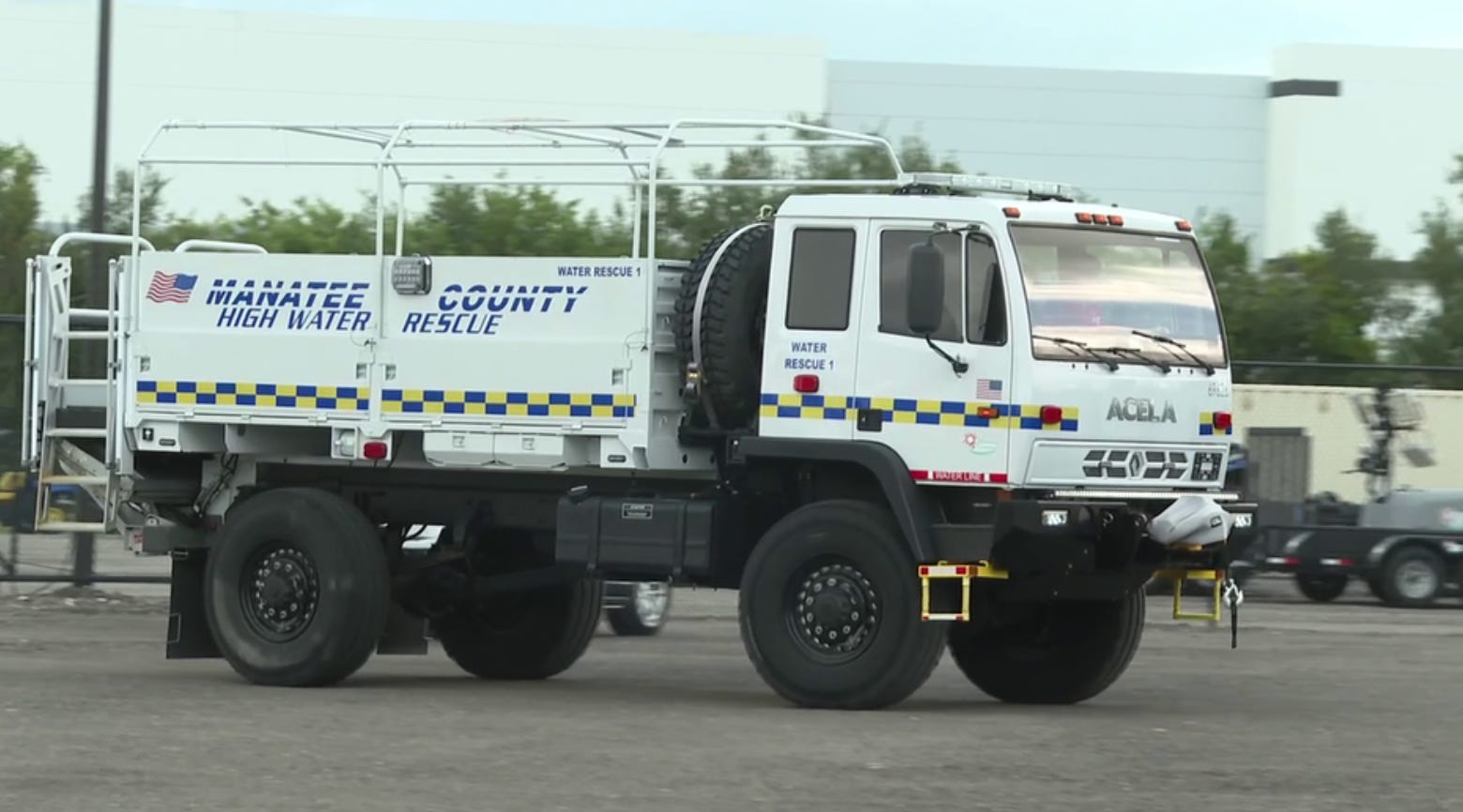
Manatee County Beach Patrol has added a specialized high-water rescue vehicle to its emergency response fleet, enhancing the county’s ability to assist residents during severe flooding events.
The new vehicle, which can safely operate in up to 48 inches of floodwater, will be used to reach residents trapped in flood zones and transport them to safety during hurricanes, tropical storms and other weather-related emergencies. County officials said the addition makes Manatee County Beach Patrol one of the first lifeguard agencies in Florida certified to perform both high-water and swift-water rescue operations.
The need for the vehicle became evident following recent flooding events, including the 2024 hurricane season, when rising waters left residents stranded in neighborhoods from the beaches to inland communities. The specialized vehicle provides a faster and more efficient alternative to traditional boat rescues in certain flood conditions.
To prepare for the vehicle’s deployment, Beach Patrol personnel completed extensive training alongside North River Fire District and West Manatee Fire Rescue. The training included flood response scenarios and certification requirements for swift-water rescue operations.
The rescue vehicle can transport between 25 and 30 people at a time, allowing emergency crews to evacuate large numbers of residents more quickly than using boats alone. A key feature is its liftgate system, designed to accommodate individuals with mobility challenges, including those using wheelchairs or confined to beds.
The vehicle cost approximately $236,155 and was funded through a combination of impact fees and grant funding, according to county officials.
County leaders said the investment strengthens regional disaster preparedness and highlights ongoing collaboration between Beach Patrol and local fire rescue agencies. Officials noted that expanding the capabilities of lifeguards during emergencies allows fire rescue agencies to focus on other critical response needs while improving overall public safety during major flooding events.