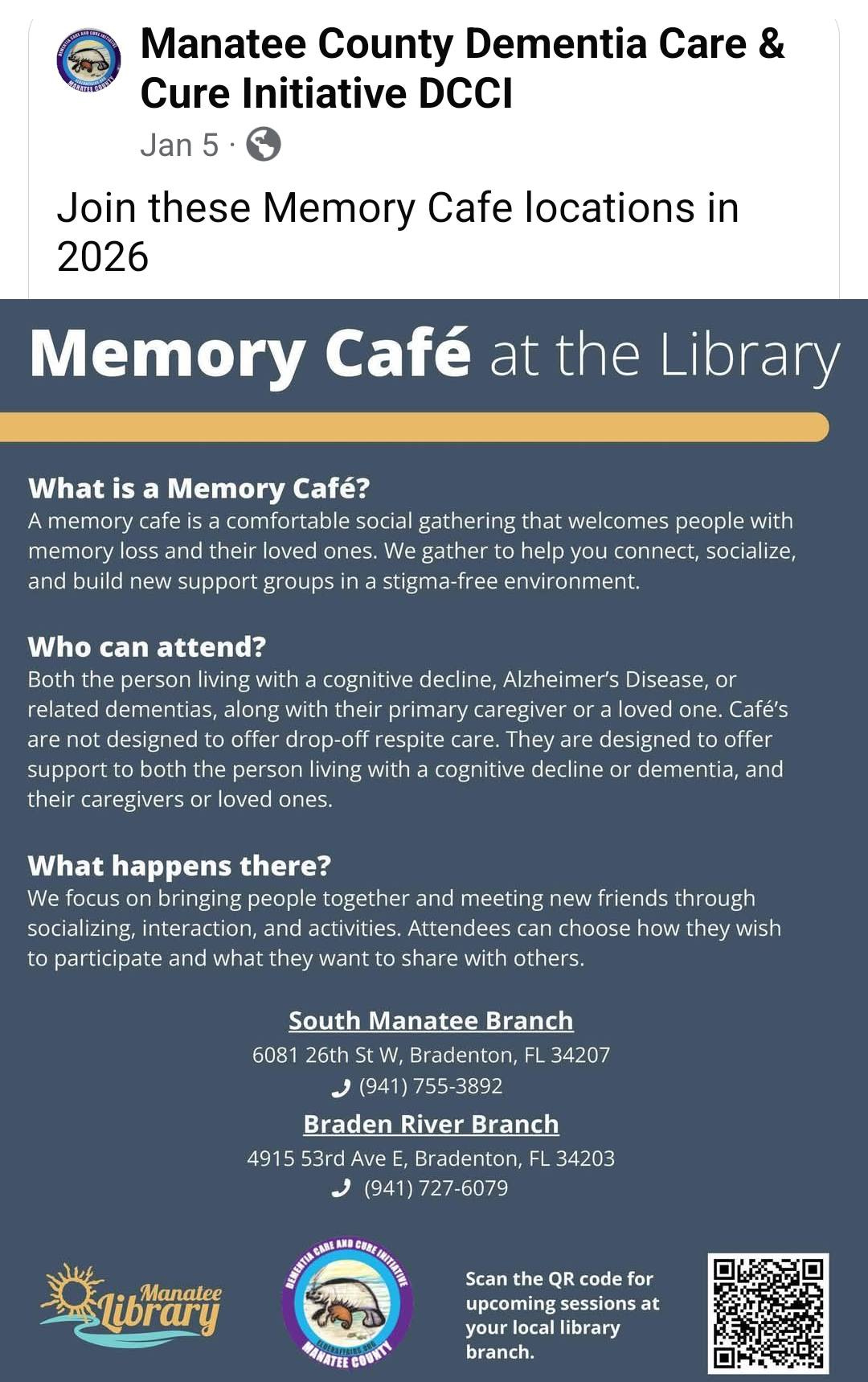
Manatee County residents living with memory loss and their loved ones will have new opportunities for connection and support in 2026 through the Memory Café at the Library program. Offered in partnership with the Manatee County Dementia Care and Cure Initiative (DCCI), Manatee County Public Library, and Suncoast Aging Network, the Memory Cafés provide a welcoming, stigma-free space for social interaction and community building.
A Memory Café is a comfortable social gathering designed for individuals experiencing cognitive decline, Alzheimer’s disease, or related dementias, along with their caregivers or loved ones. Rather than serving as drop-off respite care, the program focuses on shared participation, offering support to both individuals living with memory challenges and those who care for them.
Participants are encouraged to connect, socialize, and build friendships through light activities, conversation, and interaction. Attendees may choose how they wish to participate and what they feel comfortable sharing, creating an inclusive and respectful environment for everyone involved.
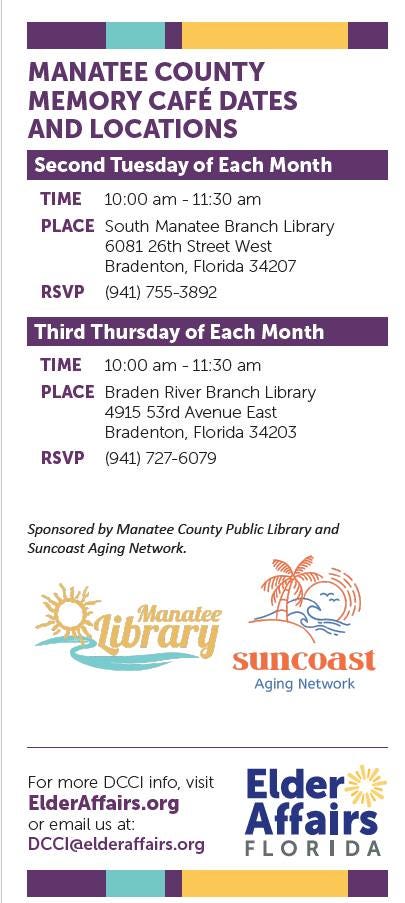
In 2026, Memory Cafés will be held monthly at two Manatee County library locations. The South Manatee Branch Library, located at 6081 26th Street West in Bradenton, will host sessions on the second Tuesday of each month from 10:00 to 11:30 a.m. The Braden River Branch Library, located at 4915 53rd Avenue East in Bradenton, will host sessions on the third Thursday of each month from 10:00 to 11:30 a.m.
Residents interested in attending are encouraged to RSVP with their preferred library branch. Additional session details and updates are available by scanning the QR code provided on promotional materials or by visiting ElderAffairs.org. Questions can also be directed via email to DCCI@elderaffairs.org.
The Memory Café program reflects a growing community effort to support aging residents and their caregivers by fostering understanding, reducing isolation, and strengthening local support networks through accessible, library-based programming.