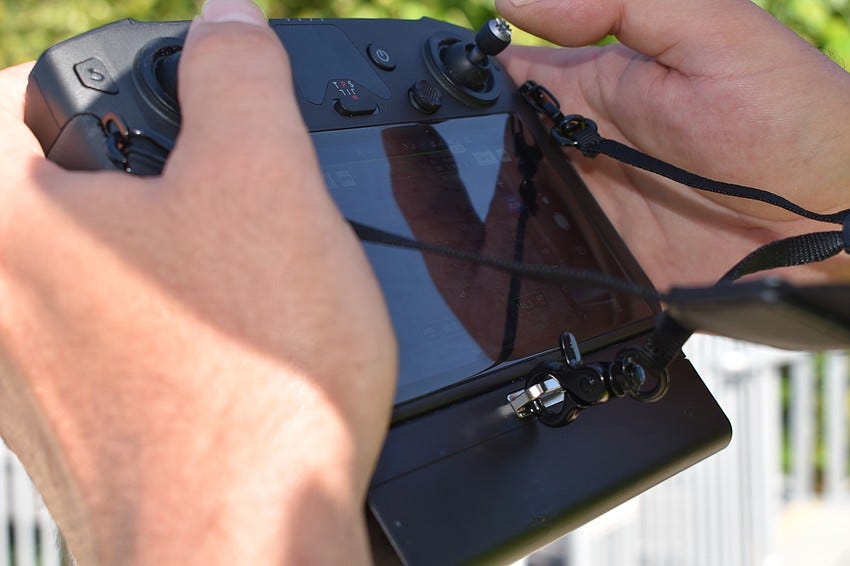
Manatee County continues to expand and modernize its drone program as new state and federal restrictions reshape how local governments use unmanned aircraft systems.
County-operated drones are a regular presence in local airspace, capturing photos, video, laser-based imaging, and other data used across departments. The fleet includes a range of equipment, from small quadcopters costing a few hundred dollars to advanced fixed-wing aircraft such as the senseFly eBee TAC, which carries a price tag exceeding $50,000.
One notable absence from the county’s fleet is any drone manufactured by China-based DJI, the world’s largest drone producer. Federal actions, supported by national security concerns, have blocked new DJI models from entering the United States, while Florida law separately prohibits state and local governments from using drone manufacturers not on an approved list. DJI is not included, requiring Manatee County and other jurisdictions to discontinue their use.
As a result, Manatee County has removed 16 DJI drones across six departments, along with six cameras that were only compatible with those systems. Since September 2025, the county has replaced several units, acquiring four new drones and three cameras at a cost of $216,847. The updated fleet now carries an annual operating cost approximately $21,500 higher than before the transition.
In addition, county commissioners approved $41,144 in liability insurance for the drone program, which now represents an asset value exceeding $380,000.
County officials emphasize that drones play a critical role in daily operations and emergency response. Departments use them for infrastructure monitoring, environmental assessments, utility inspections, and storm preparation and recovery. Before recent hurricanes, crews used drones to document beach conditions before and after landfall, as well as to assist with canal maintenance and red tide monitoring.
The shift away from DJI equipment required the county to restart portions of its drone program. Retired units were placed into surplus inventory despite still having usable service life remaining. County leaders indicate that future presentations will highlight not only aerial drones but also emerging technologies, including aquatic and submersible robotic systems designed for specialized tasks.
Officials say building an in-house drone program has improved efficiency. Previously, the county often relied on outside contractors for aerial imaging, which could take more than a week to deliver finished products. With internal capabilities, turnaround times have been reduced to a matter of days, helping departments respond more quickly while avoiding emergency procurement costs.
However, the transition has raised concerns among some commissioners about rising expenses. Questions have been raised about whether similar operational goals could be achieved with lower-cost equipment available on the state’s approved vendor list.
Other officials have pointed to the broader financial impact of the state mandate, noting that replacing functional equipment ahead of its expected lifespan creates an unplanned burden on local budgets. Despite those concerns, county leaders acknowledge they must comply with state requirements while continuing to maintain critical operational capabilities.
As drone usage continues to expand in both government and private sectors, officials also recognize growing public awareness and scrutiny of aerial technology. County leaders indicate they plan to provide additional transparency about how drones and related systems are deployed in the community moving forward.