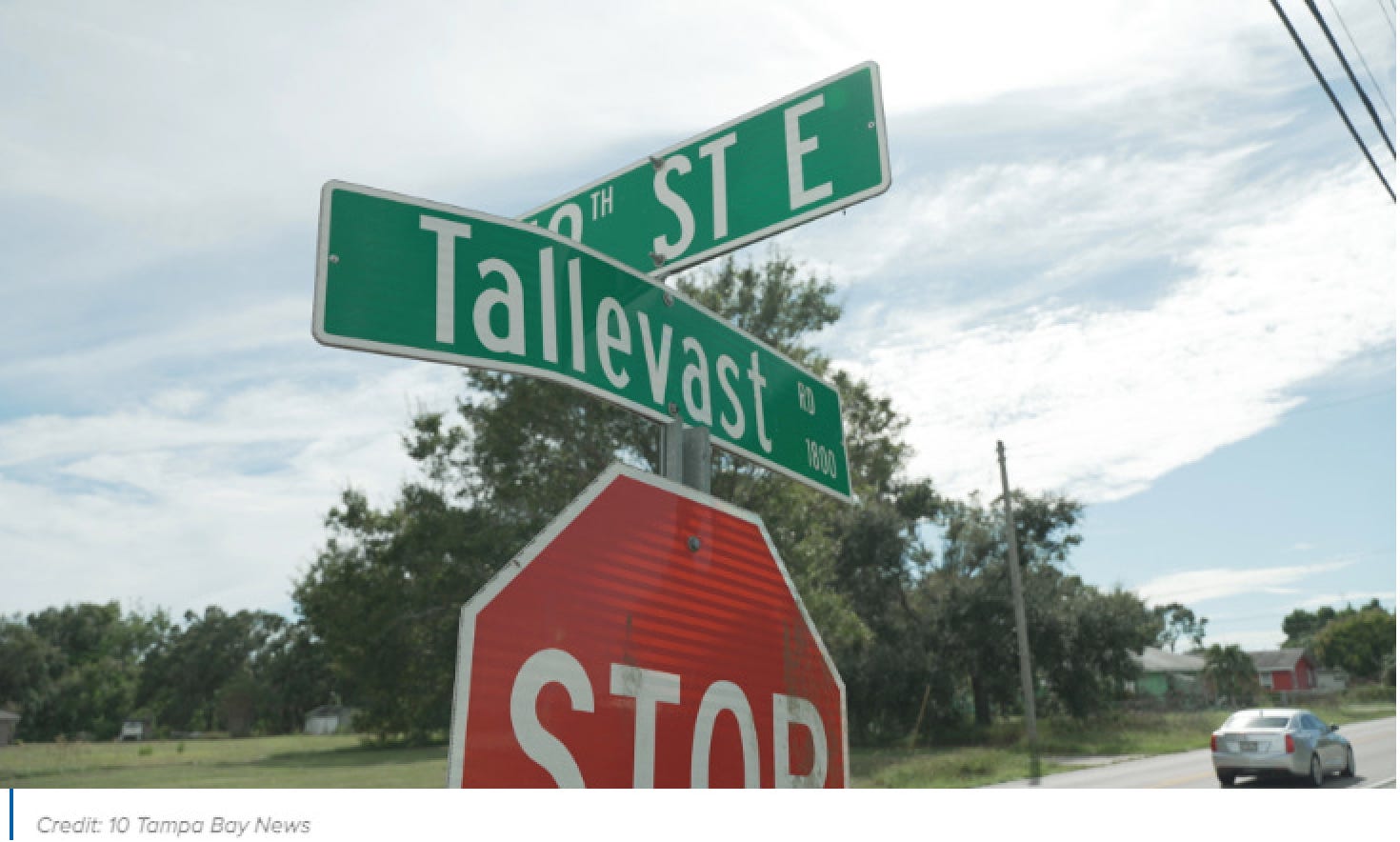
Manatee County reallocated $5 million in American Rescue Plan Act funds initially set aside for sewer infrastructure in the Tallevast community to other uses, including salaries and a separate county project, according to a recent 10 Tampa Bay investigation.
Tallevast, an unincorporated neighborhood in south Manatee County with a long history of environmental contamination, has been the focus of cleanup efforts after decades of pollution linked to industrial operations at the former American Beryllium Company plant, later owned by Lockheed Martin. Groundwater beneath the community was found to contain hazardous chemicals, prompting a long-term remedial action plan expected to span decades.
The 10 Tampa Bay investigation found that Manatee County initially designated $5 million of its $78 million in federal ARP funds for sewer connections in Tallevast, part of broader guidance that allowed ARP dollars to be spent on water and sewer infrastructure. However, county officials later shifted the allocation, using part of the funds to cover payroll costs and to support the county’s “Light Up Manatee” initiative, a separate program to install streetlights in underserved areas.
In a discussion with 10 Tampa Bay, County Commissioner Mike Rahn, who represents the Tallevast district, acknowledged that $5 million alone would not cover the full cost of a new sewer lift station and related infrastructure, particularly given the challenges posed by soil contamination, which complicates underground work. He said the funds were reassigned to other county priorities, though it was unclear if Tallevast residents were consulted before the decision.
Tallevast residents and advocates have long highlighted the community’s struggle with environmental and infrastructure needs. The area’s contamination story dates back decades, with solvents and toxic chemicals migrating into soil and groundwater from the former industrial site, prompting cleanup overseen by state and federal agencies.
Community leaders and some residents argue that restoring sewer service is a fundamental infrastructure need that supports public health and quality of life, particularly in a neighborhood still coping with the legacy of contamination and decades of underinvestment. The Department of Environmental Protection and county officials continue to work on remediation and planning efforts, but infrastructure gaps remain central to Tallevast’s concerns.
This reallocation of funds has renewed debate over how federal dollars are spent at the local level, particularly in communities with documented environmental health challenges and a history of neglect. Stakeholders say transparent communication and committed investment will be critical as cleanup and community development efforts progress.