The Manatee County Sheriff’s Office is working to educate residents about the differences between e-bikes and e-motos as the popularity of electric-powered bikes continues to grow across the community.
Through a new public safety campaign, the sheriff’s office outlined the classifications for Class 1, Class 2 and Class 3 e-bikes, as well as the legal distinctions that separate e-motos from traditional electric bicycles.
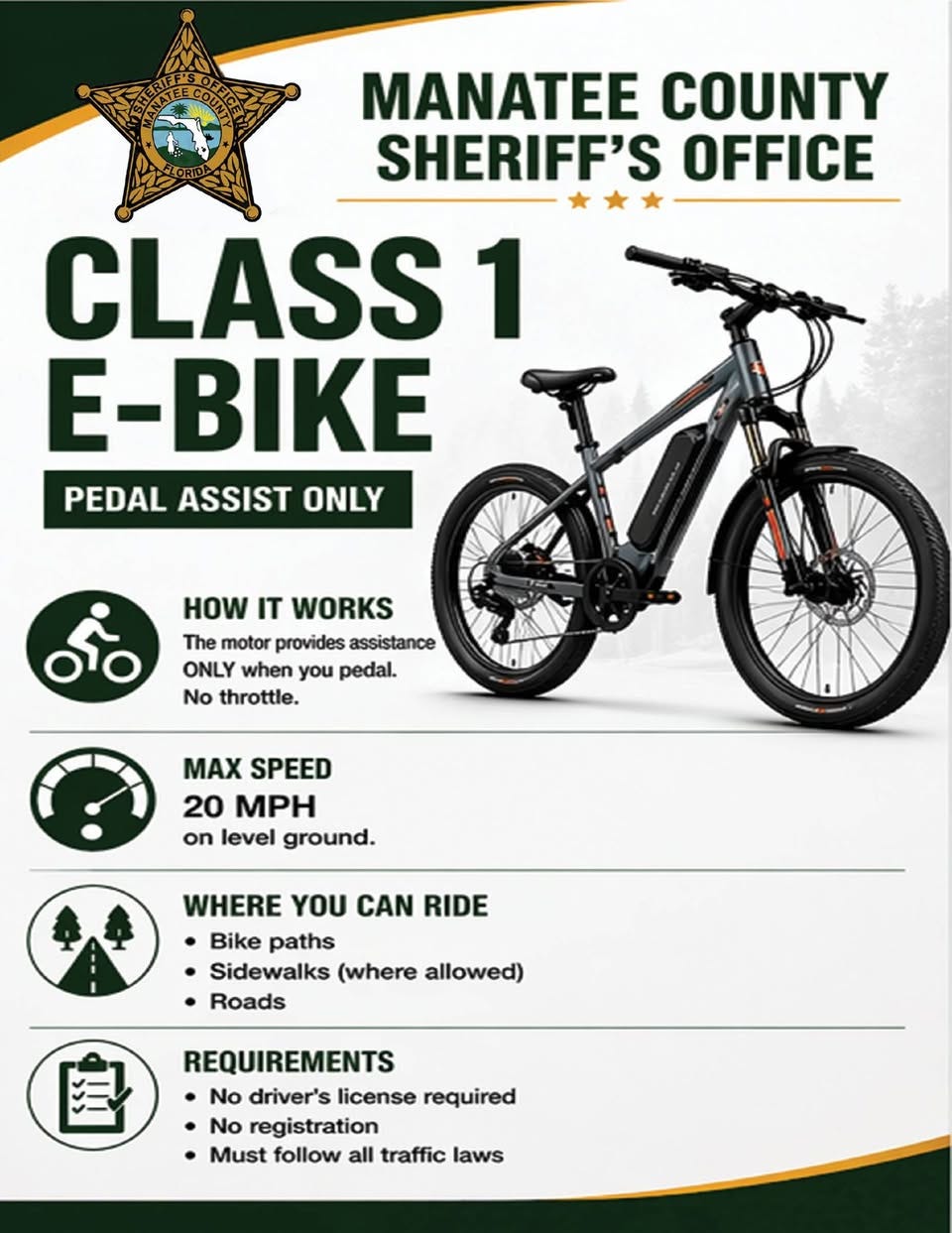
According to the agency, Class 1 e-bikes are pedal-assist only and can reach speeds up to 20 mph. Riders are not required to have a driver’s license or vehicle registration, but they must still obey all traffic laws. These bikes are permitted on roads, bike paths and sidewalks where allowed.
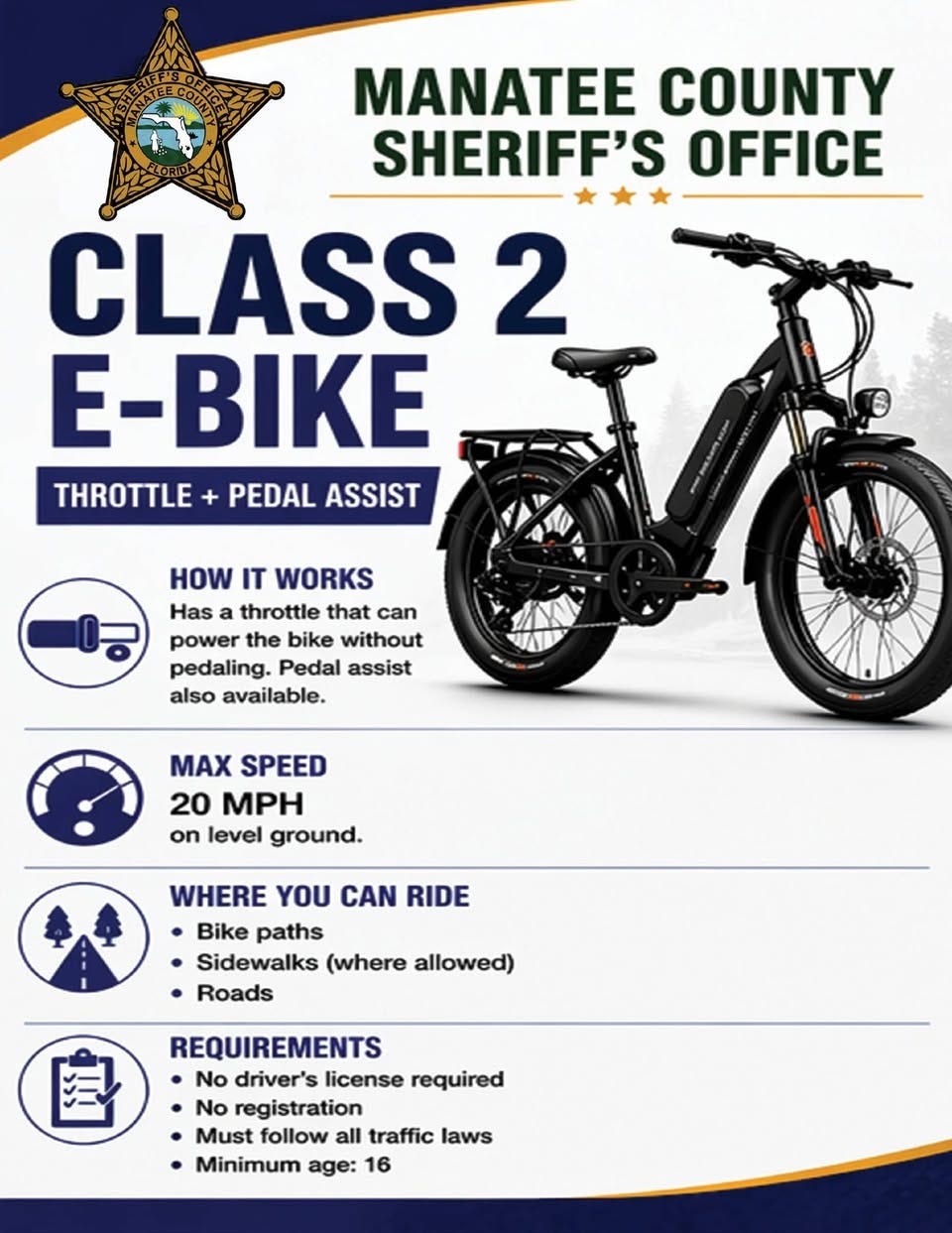
Class 2 e-bikes include both throttle and pedal-assist capabilities and are also limited to 20 mph on level ground. Similar to Class 1 bikes, they do not require registration or a driver’s license and may be used on roads, bike paths and approved sidewalks.
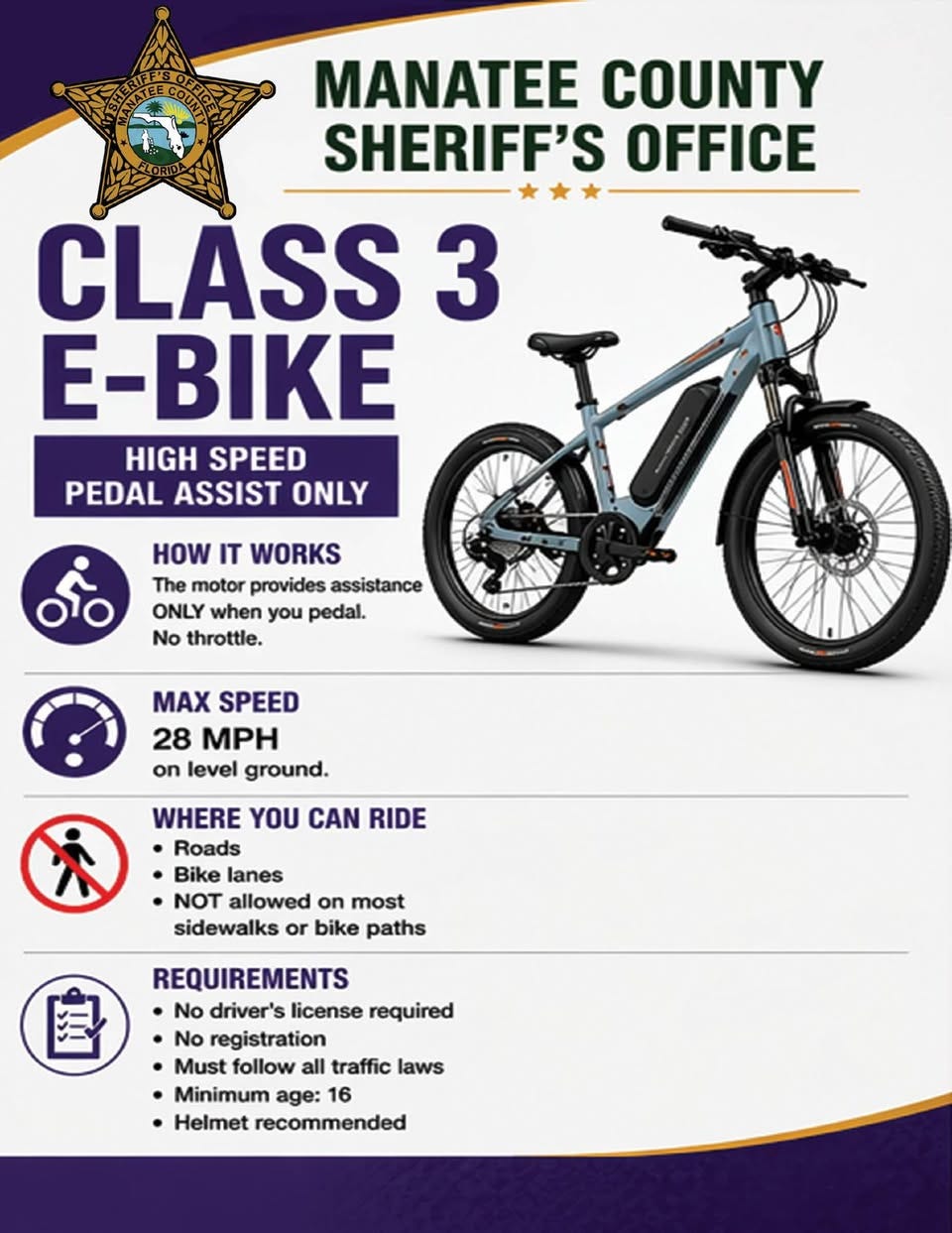
Class 3 e-bikes are designed for higher-speed pedal assistance and can reach up to 28 mph. Unlike lower-class e-bikes, Class 3 models are generally restricted from most sidewalks and bike paths. Riders must be at least 16 years old, and helmets are recommended.
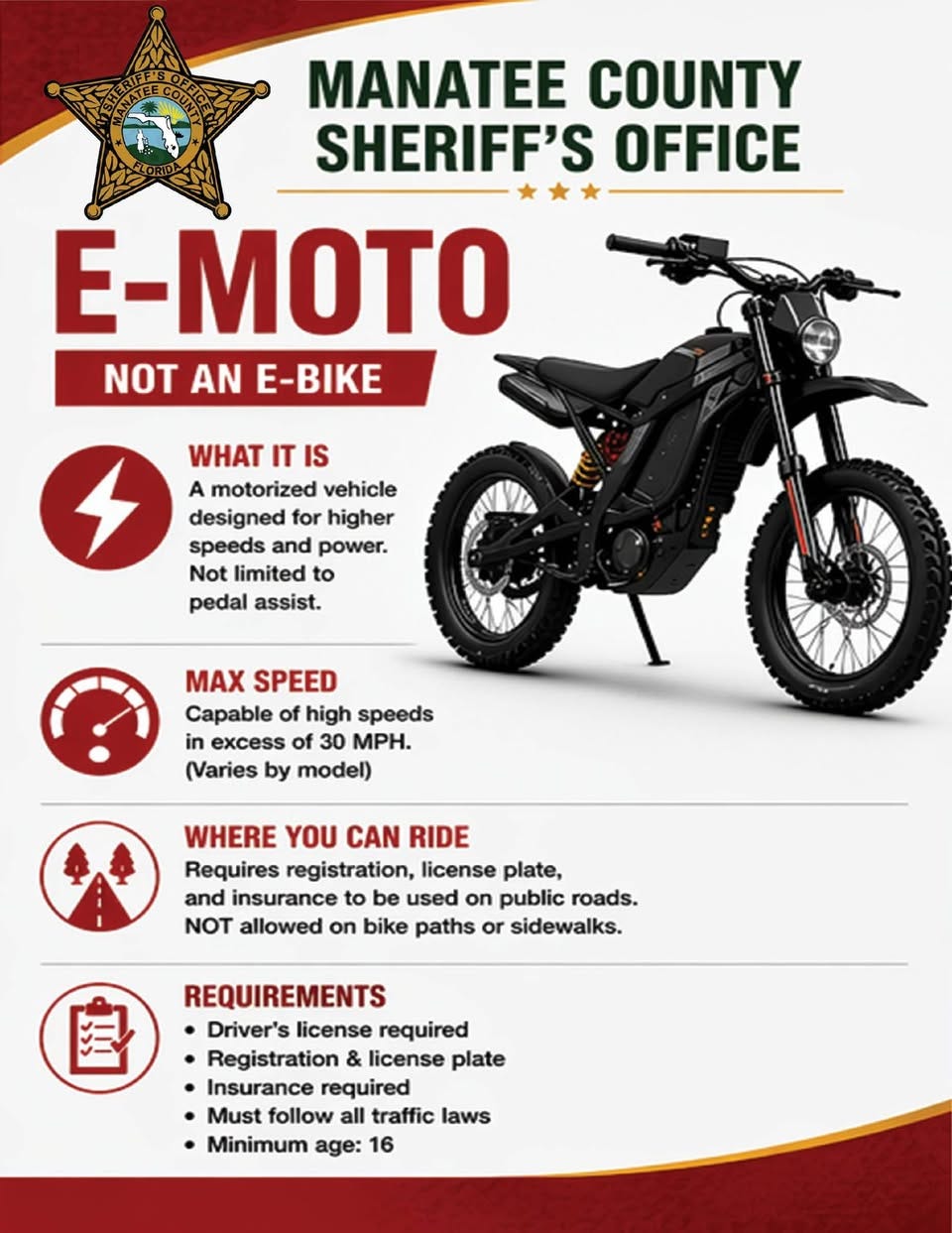
The sheriff’s office also emphasized that e-motos are not considered e-bikes under Florida law. E-motos are motorized vehicles capable of speeds exceeding 30 mph and are not limited to pedal assistance. Because of their higher speeds and power, they are subject to requirements similar to those of motorcycles or motor vehicles.
Officials said e-motos require a driver’s license, registration, a license plate and insurance to operate on public roads. Riders must also follow all traffic laws and be at least 16 years old. These vehicles are not permitted on bike paths or sidewalks.
The sheriff’s office encouraged parents and riders to understand the differences before purchasing or operating electric-powered bikes and reminded the public that improper use can result in citations or safety risks for riders and pedestrians.