

For many longtime Manatee County residents, the organization now known as Dogs Inc will always be associated with its former name, Southeastern Guide Dogs, and its familiar Labrador retrievers trained to help people who are blind or visually impaired.
Guide dogs remain an important part of the Palmetto-based nonprofit’s work, but they are only one part of its mission today.
Dogs Inc trains dogs for four primary roles: guide dogs, service dogs, skilled companion dogs and therapy dogs. Together, its programs serve people with vision loss, veterans with disabilities, people living with Type 1 diabetes, Gold Star families, children and teens with vision loss, and others who can benefit from the support of a highly trained dog. Therapy dogs extend that reach into facilities serving patients, healthcare workers and first responders.
There is an important distinction among those programs. Guide and service dogs are individually matched with people and trained to perform work related to their needs. Skilled companion dogs are also placed with individuals or families but do not have the same public-access rights as service dogs. Therapy dogs serve a different purpose, working in participating facilities where they can provide comfort and support to many people rather than functioning as an individually matched service dog.
Dogs Inc provides its dogs and services at no cost to those it serves.
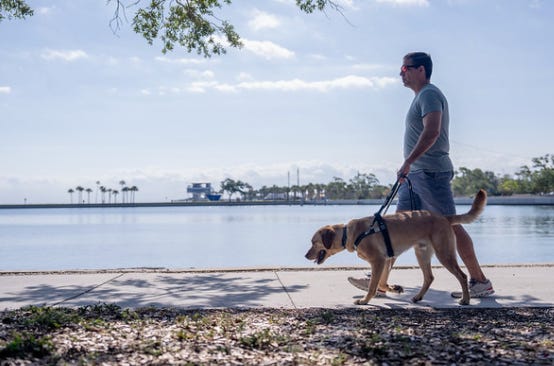
Guide Dogs for People With Vision Loss
Dogs Inc’s guide dog program continues the work for which Southeastern Guide Dogs became known throughout Manatee County.
Guide dogs are trained to help people who are legally blind travel more safely and independently. The dogs learn specialized skills for navigating the environments their handlers encounter in everyday life.
Adults 18 and older may apply, with no upper age limit. Mature teens ages 15 to 17 may be eligible for the organization’s youth guide dog program.
Applicants must be legally blind, live in the United States and demonstrate a need for additional navigational assistance. They must also have completed formal Orientation and Mobility training and be able to demonstrate the ability to travel independently.
Applicants need the physical ability to work with and control a large dog and must be able to provide the dog with a safe and stable home.
Once accepted and matched, guide dog students receive instruction in working with their new partners, preparing the person and dog to function together as a team.
Service Dogs for Veterans
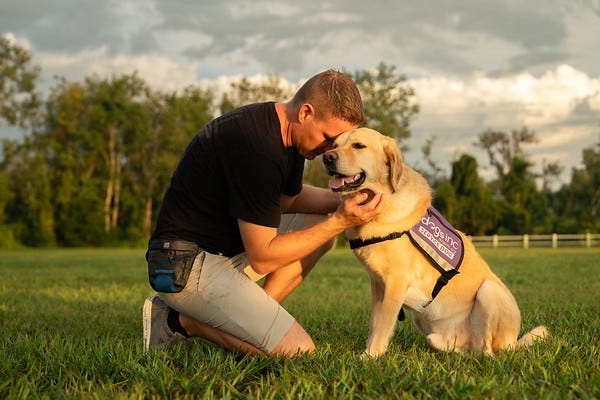
Dogs Inc also trains service dogs for veterans living with disabilities.
These dogs can assist veterans with both visible and invisible disabilities, with their specialized training determined by the needs of the person they will serve.
The veteran service dog program is available to retired or inactive members of the military, as well as those approaching retirement who meet the organization’s requirements. Applicants must meet Dogs Inc eligibility requirements and provide documentation as part of the application process.
Additional documentation may be required when a veteran is seeking a dog to assist with military service-connected post-traumatic stress disorder.
Applicants must also be capable of consistently handling, working with and caring for a service dog.
Service Dogs for People With Type 1 Diabetes
Dogs Inc has also expanded its service-dog work to include specially trained dogs for people living with Type 1 diabetes.
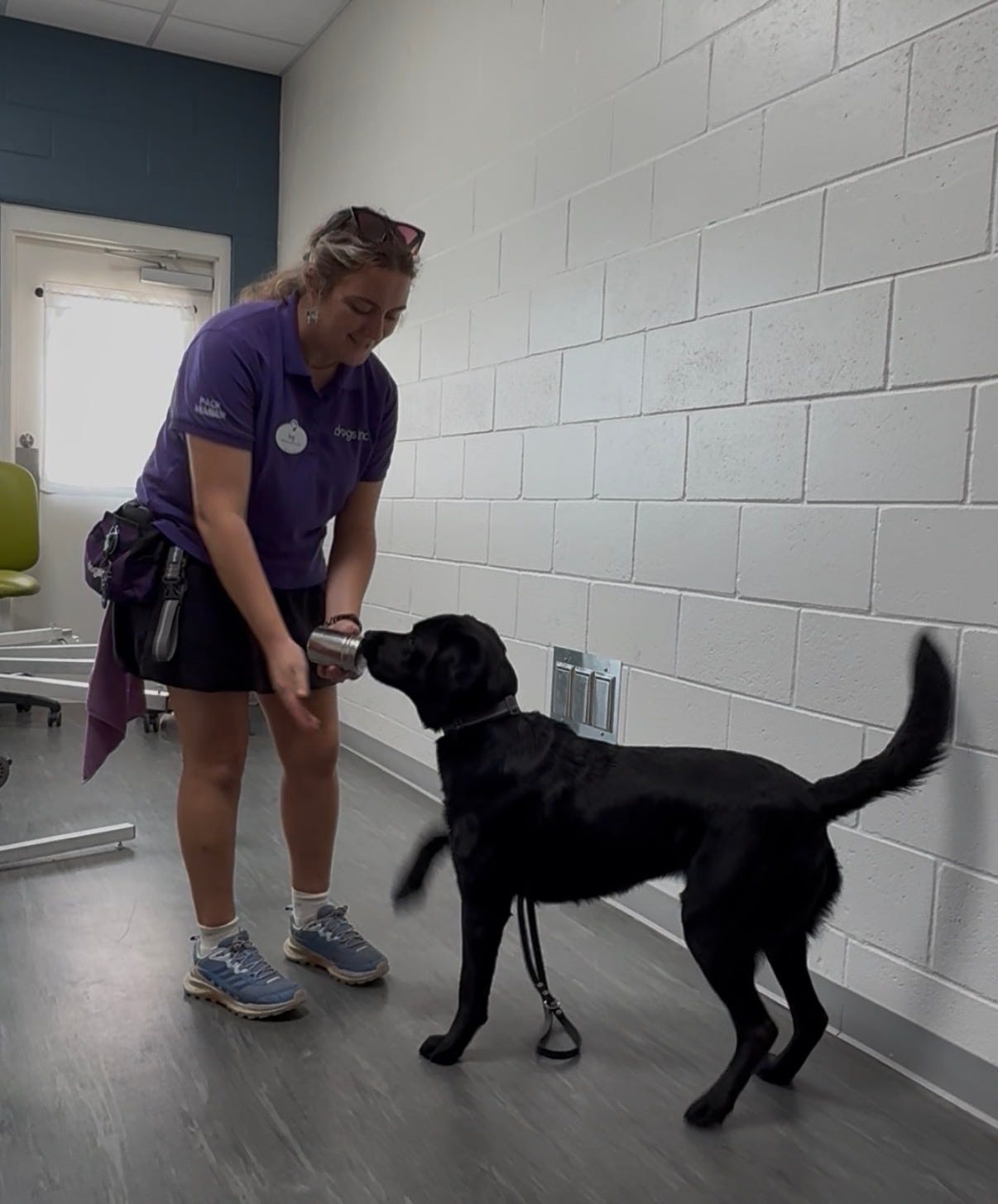
These dogs use their highly developed sense of smell to recognize scent changes associated with shifts in blood glucose levels. Once detected, the dog can alert its handler, providing another layer of awareness alongside the person’s existing diabetes management.
Dogs can also be trained in additional skills related to their handler’s needs, such as retrieving medical supplies.
The program is intended for qualifying adults with Type 1 diabetes who can care for and work with a large-breed service dog and participate actively in the training process.
The dogs are intended to provide additional assistance and are not replacements for medical care or glucose-monitoring technology.
Dogs Inc also needs people living with Type 1 diabetes to help train future scent service dogs. Scent donors provide samples that allow dogs in training to learn to identify the scent changes associated with blood glucose fluctuations.
That means someone who may not need or qualify for a service dog can still play a direct role in preparing one for another person.
Skilled Companion Dogs Provide Another Kind of Support
Not every Dogs Inc dog is trained to guide someone through an intersection or perform a disability-related service task.
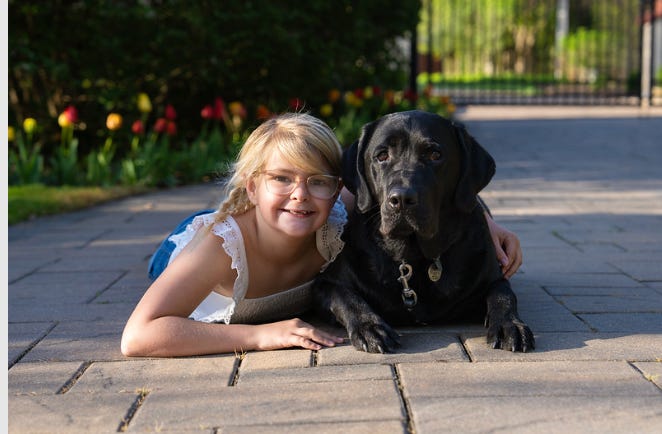
Skilled companion dogs are trained to provide companionship and support to people and families facing particular challenges.
Dogs Inc identifies several roles for these dogs, including providing friendship to children, teens and adults with vision loss who may be experiencing isolation; companionship for veterans dealing with loneliness; support for military families coping with stress; and comfort for Gold Star families grieving the loss of a loved one in military service.
For children and teens with vision loss, living with a skilled companion dog can also help build confidence and teach some of the responsibilities involved in caring for a dog.
There is an important legal distinction between a skilled companion and a service dog. Skilled companion dogs are not trained to perform disability-mitigating tasks and therefore do not have the same public-access rights afforded to trained service dogs under the Americans with Disabilities Act.
Therapy Dogs Bring Support to Healthcare Workers and First Responders
A fourth group of Dogs Inc dogs has a very different assignment.
Therapy dogs are trained to bring comfort and support into facilities where they can interact with many people, rather than being individually matched with one person as a guide or service dog.
Dogs Inc therapy dogs are placed at military facilities across the United States, where they provide support to patients and healthcare workers.
The organization also places therapy dogs at facilities serving first responders in Central and South Florida.
Their role is centered on interaction, comfort and emotional support in environments where people may routinely experience stress, trauma or difficult circumstances.
Therapy dogs are different from service dogs under federal disability law. A service dog is individually trained to perform work or tasks for a person with a disability. Therapy dogs provide comfort to others and do not receive the same general public-access rights as service dogs.
The placement process is also different. Rather than an individual applying to receive a therapy dog as a personal working dog, Dogs Inc works with appropriate facilities and programs where a therapy dog can serve a broader population.
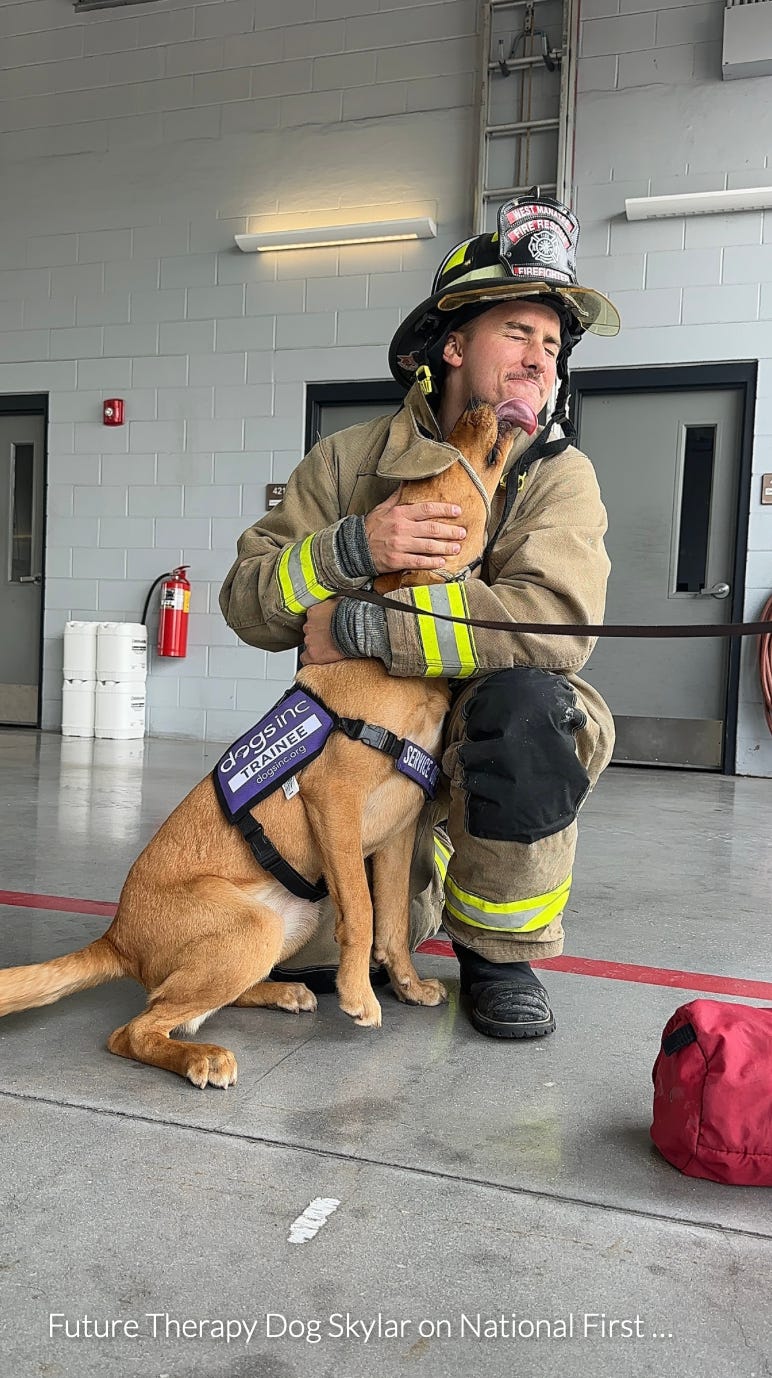
Skylar is now working as a therapy dog at the Cedar Hammock Fire Department.
What Does It Cost?
For recipients, Dogs Inc provides its dogs and services at no cost.
Behind that commitment is an extensive investment in every working dog. Each dog’s journey can involve breeding, veterinary care, early puppy development, volunteer puppy raising, professional training, matching, recipient instruction and continuing support after graduation.
Those expenses are made possible through donors, businesses, foundations, fundraising efforts and volunteers.
That community support allows Dogs Inc to focus on finding the appropriate partnership rather than a recipient’s ability to pay for a highly trained dog.
How to Apply — And Which Programs Accept Individual Applicants
Because Dogs Inc operates several different programs, there is no single application that applies to every type of dog.
People interested in receiving a guide dog, service dog or skilled companion dog should begin by reviewing the individual programs and eligibility requirements on the Dogs Inc website. Requirements vary depending on the type of dog and the population the program serves.
The application process may include medical or professional documentation, references, interviews and an assessment of whether the applicant can safely work with and care for the dog. Meeting the basic eligibility requirements does not automatically guarantee acceptance or an immediate match.
Matching is a critical part of the process. Dogs Inc considers the needs and lifestyle of the applicant along with the dog’s abilities, temperament, pace and working style before creating a partnership.
Therapy dogs follow a different path. They are not generally dogs that an individual applies to receive for personal use. Dogs Inc places therapy dogs in qualifying facilities where they can support groups of people, including patients and healthcare workers at military facilities and first responders at facilities in Central and South Florida.
Prospective applicants should also check the current status of individual programs before beginning the process. Some programs may have geographic restrictions, specific eligibility requirements or limited openings as Dogs Inc develops and expands its services.
Those distinctions are important because the term working dog can describe several very different roles. A guide dog helping a person with vision loss navigate the community, a service dog assisting a veteran, a diabetes scent service dog alerting its handler, a skilled companion providing friendship to a child, and a therapy dog supporting people inside a facility are all highly trained Dogs Inc dogs — but their jobs and placement processes are not the same.
For someone who believes a Dogs Inc program could provide greater independence, safety or companionship, learning about the available programs is the first step.
And for those who do not need a dog but want to help make those partnerships possible, Dogs Inc offers other ways to participate, including volunteer puppy raising, scent donation for Type 1 diabetes training, other volunteer opportunities and financial support.
Additional information about Dogs Inc programs, eligibility requirements, applications and ways to become involved is available at DogsInc.org.