The city of Palmetto is undergoing a period of significant transformation as leaders work to balance rapid growth with the preservation of the character that has defined the community for generations.
Located along the Manatee River just north of Bradenton, Palmetto spans roughly seven square miles and is home to about 14,000 residents. Founded in 1868 and incorporated in 1897, the city is shifting from its roots as a quiet agricultural hub into a more modern, evolving community with new housing, infrastructure, and commercial development.
City leaders are guiding that transition with a focus on maintaining the qualities that longtime residents value while preparing for a future shaped by growth. The challenge lies in balancing development with identity, while also reshaping how the city is perceived beyond Manatee County.
Recent activity reflects that dual focus. The city’s Community Redevelopment Agency approved the sale of multiple parcels for a proposed six-story mixed-use development that would include 152 apartments, signaling continued investment in housing and economic development. At the same time, officials have begun preliminary discussions on a branding campaign to redefine Palmetto’s image and highlight its assets to a broader audience.
Efforts to honor the city’s past remain visible. A heritage festival held in March celebrated Palmetto’s agricultural history at the local historical park, which features landmarks such as the city’s first post office, built in 1880. These events underscore a broader strategy of using history as a foundation for future growth.
Palmetto’s origins trace back to founder Samuel Sparks Lamb, who envisioned a thriving village and donated land for civic uses, including churches, a library, and public spaces. The arrival of the railroad in 1902 helped establish the city as a regional agricultural center, particularly for citrus production, which remained a dominant industry for decades before declining due to environmental and economic challenges.
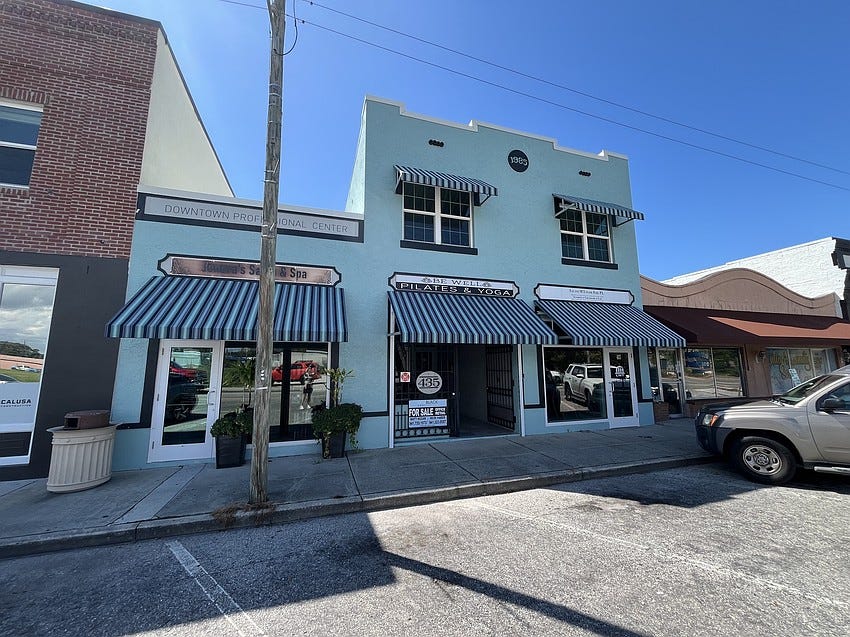
Today, the city presents a mix of old and new. Commercial corridors along U.S. 41 and Eighth Avenue feature businesses, services and newer developments, while just blocks away, the historic downtown area offers a quieter setting with small shops, older homes and waterfront access.
Local stakeholders say one of the city’s ongoing challenges is perception. For many passing through, the view from major roadways does not fully reflect the depth of the community, including its historic district and riverfront areas.
To address that, both public and private efforts are underway. Projects include plans for a multimodal Riverwalk, improvements to key corridors, and expanded park space. Infrastructure investments, including upgrades to sewer capacity, are also being made to support population growth.
Residential and commercial expansion continues across the city. Large-scale developments such as Riviera Dunes are adding new waterfront homes, while industrial growth is planned through the expansion of the Florida International Tradeport.
Newer additions, such as the Palmetto Marriott Resort & Spa, have also contributed to shifting perceptions, bringing increased visibility and tourism potential to the area. Additional enhancements and future development are being considered to further activate the waterfront and attract both residents and visitors.
City leadership has emphasized the importance of telling a more complete story about Palmetto—one that reflects both its history and its future. A planned branding initiative is expected to play a key role in that effort, helping unify messaging for residents, businesses and prospective investors.
Several projects are already underway or in development, including the rehabilitation of the historic Palmetto Women’s Club, redevelopment of Connor Park, oyster restoration efforts in the bay, and new parks and trail systems designed to improve connectivity throughout the city.
As Palmetto continues to evolve, its path forward is defined by a careful balance: embracing new opportunities for growth while preserving the heritage and sense of community that have long shaped its identity.